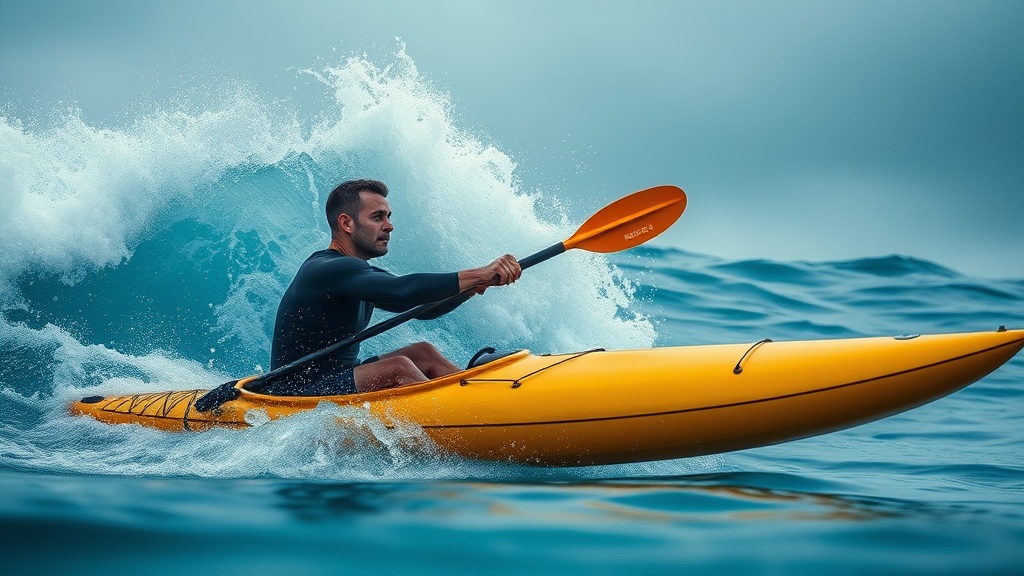
Beyond the Swell: Cultivating a Kayak Surfer's Mindset for Unwavering Performance

Beyond the Swell: Cultivating a Kayak Surfer's Mindset for Unwavering Performance
Imagine this scenario: you’re out on the water, the forecast promised manageable conditions, but the ocean has decided to put on a show — bigger, more unpredictable sets are rolling in. That familiar surge of adrenaline, coupled with a hint of uncertainty, starts to take hold. It’s in these moments, when the raw power of the ocean challenges your skills and composure, that your mental game becomes just as significant — if not more so — than your physical preparation. While plenty of attention rightly goes to paddle strength, balance, and wave reading, the often-underestimated aspect of mental fortitude is what truly distinguishes a good session from a truly great one, and crucially, it’s what keeps you progressing and safe when conditions turn demanding. This article explores actionable strategies designed to sharpen your mind for consistent performance and deeper enjoyment on the water, transforming moments of hesitation into powerful opportunities for growth.
How Does Mental Preparation Impact Your Kayak Surfing Performance?
Many kayakers focus intensely on the physical side of surfing — building power, refining technique, or understanding wave dynamics. These are, without a doubt, foundational. But what happens when the perfect wave comes, and hesitation — even a split-second doubt — causes you to miss it? Or worse, when a challenging situation triggers panic, leading to poor decisions? Mental preparation isn’t some abstract concept; it directly translates to concrete improvements in your surfing. It’s about building resilience, enhancing focus, and maintaining composure when it matters most.
- Mastering the Inner Dialogue: Shifting from Doubt to Determination
Your internal monologue can be your biggest ally or your fiercest opponent. On the water, an unexpected wipeout or a challenging current can quickly trigger negative thoughts: “I’m not good enough,” “I shouldn’t be out here,” “I’m going to mess this up.” These thoughts aren't merely distractions; they actively deplete your confidence and impair your decision-making. Developing mental toughness involves recognizing these patterns and consciously reframing them. Instead of fixating on a failed attempt, acknowledge it as a learning moment. What can you take from that experience to improve the next time? This isn’t about denying fear or frustration, but about preventing them from spiraling into self-sabotage. It’s about cultivating a voice that offers encouragement and analytical feedback, rather than harsh criticism. This shift allows you to stay present, learn from every interaction with the wave, and maintain a growth-oriented approach, even when things don't go perfectly. Think of it as developing a supportive coach in your head, constantly guiding you towards improvement rather than dwelling on missteps.
Professional athletes across disciplines rely heavily on visualization, and kayak surfing is no exception. Before you even launch, or as you sit waiting for a set, close your eyes (or gaze distantly) and mentally rehearse your desired actions. Picture yourself paddling strongly into a wave, executing a clean take-off, making precise turns, and navigating the break with fluidity and confidence. Feel the paddle stroke, the balance of the boat, the spray on your face. This isn't just wishful thinking; it’s a powerful mental training tool. Visualization activates neural pathways similar to those used during actual physical performance, effectively practicing the movements and reactions before they occur. It builds muscle memory in your mind, reduces anxiety by familiarizing you with challenging scenarios, and reinforces positive outcomes. Regularly engaging in detailed, multi-sensory visualization can dramatically improve your confidence and preparedness when those exact scenarios unfold in real-time. It’s a proactive way to build belief in your capabilities, programming your mind for success.
What Are Practical Mindset Drills for Kayak Surfers?
Mental skills, much like physical ones, aren’t innate — they’re developed through consistent practice. Incorporating specific drills into your routine, both on and off the water, can significantly bolster your mental resilience and focus. These aren't complex techniques requiring specialized equipment; rather, they are simple, yet profoundly effective, habits that build over time.
- Breathwork for Focus and Calm: The Ocean’s Natural Rhythm
Your breath is a direct link to your nervous system. In stressful situations — a powerful wave bearing down, or getting tumbled during a hold-down — our natural inclination is to hold our breath or breathe shallowly and quickly. This exacerbates anxiety and impairs clear thinking. Practicing controlled breathing can be a game-changer. Techniques like diaphragmatic breathing (belly breathing) or box breathing (inhale for four, hold for four, exhale for four, hold for four) can help you regulate your heart rate, calm your mind, and maintain oxygen flow. Incorporate short breathwork sessions into your daily routine, or even between sets in the water. Being able to consciously slow and deepen your breath under pressure allows you to maintain composure, assess situations more accurately, and react effectively. It’s a foundational tool for staying in control when everything around you feels chaotic. For more on the benefits of breathwork, particularly for athletes, consider exploring resources from organizations like the