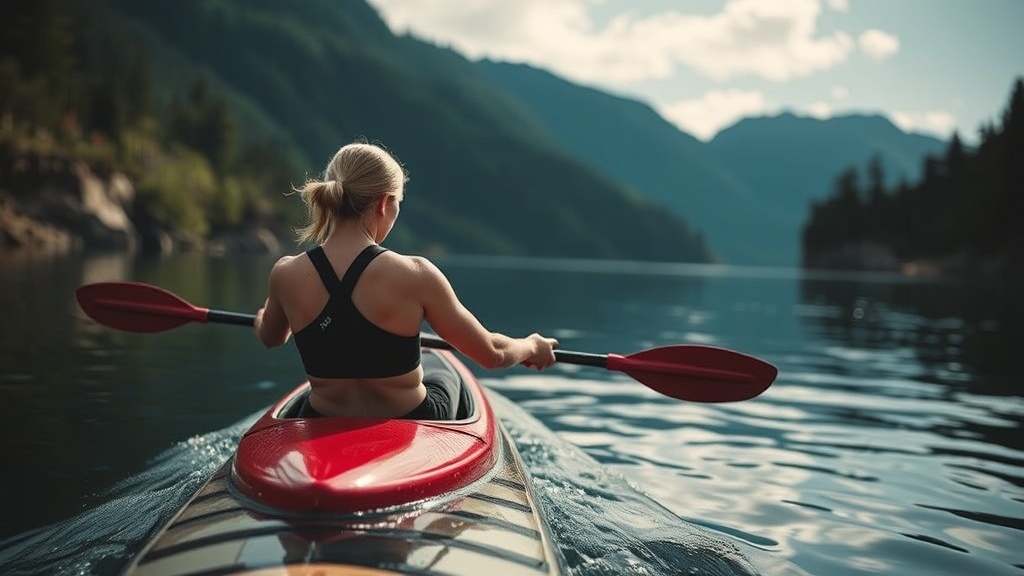
Boosting Your Core Stability for Better Paddle Control
Quick Tip
A strong core is the foundation of your balance and paddle efficiency in moving water.
Why Most Paddlers Focus on the Wrong Muscles
Most people think paddle power comes from the arms, but that's a mistake. If you're relying solely on your biceps and shoulders, you're going to fatigue way too fast. Real control comes from a stable core that connects your upper body to your lower body. This post looks at why core stability is the foundation for better paddle strokes and how you can actually build it.
When you're out in the water, your torso acts as the bridge between your paddle and the kayak. If that bridge is weak, your strokes become erratic—especially when a wave hits your hull. It's not just about strength; it's about stability.
How Do I Build Core Stability for Kayaking?
You build core stability through rotational movements and isometric holds that mimic the seated position of paddling. You don't need a fancy gym membership to get started; you just need to focus on stability and rotation. Exercises like the Russian Twist or the Plank are great, but you want to ensure you're targeting the deep abdominal muscles.
I've found that incorporating functional movements is much better than just doing standard crunches. For example, using a Rogue Fitness kettlebell for rotational lunges can translate better to the water. It forces your body to stabilize against an offset weight—just like a crosswind or a choppy wave would.
If you want to dive deeper into how movement affects your performance, check out my previous post on improving your rotational power. It’s a natural extension of this training.
What Are the Best Core Exercises for Paddlers?
The best exercises focus on both static stability and dynamic rotation. You need to be able to hold a position while also being able to twist through a stroke without losing your center.
- The Dead Bug: This is perfect for teaching you how to keep your spine neutral while your limbs move.
- Side Planks: These target your obliques, which are vital for maintaining an edge in a turn.
- Pallof Press: This is a great way to practice resisting rotational force (the exact opposite of what you do when you're paddling).
- Bird-Dog: This builds stability across the entire posterior chain.
Worth noting: don't neglect your back. A strong core isn't just "abs"—it's your entire midsection. If your lower back is weak, you'll likely experience fatigue or even injury during long sessions.
How Much Does Core Training Affect My Control?
Direct core engagement allows for much more precise blade placement and better edge control. Without it, your paddle strokes are often disconnected from your hips, making your movements sluggish.
| Focus Area | Weak Core Result | Strong Core Result |
|---|---|---|
| Paddle Stroke | Erratic, jerky movements | Smooth, rhythmic power |
| Boat Stability | Constant wobbling | Steady, controlled edge |
| Fatigue Level | High (arm fatigue) | Low (efficient energy use) |
You can read more about the mechanics of movement on the Wikipedia page for core muscles to understand the anatomy behind these movements. It’s a solid resource for understanding why these exercises work.