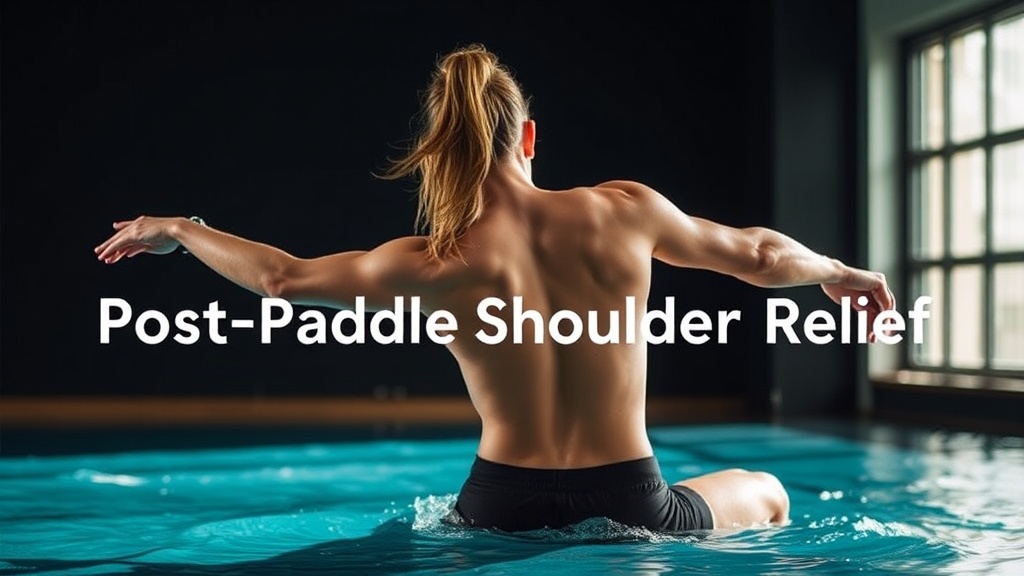
Dynamic Stretching for Post-Paddle Shoulder Relief

This guide provides a specific protocol for dynamic stretching to reduce shoulder tension and improve mobility after a heavy paddling session. You'll learn how to target the rotator cuff, deltoids, and thoracic spine to prevent long-term injury. We'll focus on movement-based recovery rather than static stretching to ensure your muscles stay primed for the next session.
Paddling a sea kayak or a surf ski requires repetitive, high-intensity shoulder rotation. If you don't manage that fatigue, you're looking at impingement or tendonitis. Most people make the mistake of doing static holds while their muscles are still "hot" and agitated. That's not the way to do it.
Why do my shoulders feel tight after paddling?
Shoulder tightness after paddling usually stems from repetitive overhead strokes and a lack of thoracic mobility. When your upper back stiffens up, your shoulder blades can't move through their full range of motion. This forces the smaller muscles in your rotator cuff to do more work than they should. It's a recipe for discomfort.
The repetitive nature of a paddle stroke—especially when you're fighting a heavy sea state—puts constant tension on the supraspinatus and the pectoralis minor. If your thoracic spine is stuck, your shoulder is forced to compensate. This often leads to that dull, heavy ache that settles in the upper traps. (I've felt this plenty of times after a long session in the Atlantic.)
To fix this, you need to move. You shouldn't just pull on your arm and hold it. You need to encourage blood flow and way more mobility. Here is a breakdown of the primary areas that need attention:
- The Rotator Cuff: Small muscles that stabilize the joint.
- The Thoracic Spine: The mid-back area that allows for rotation.
- The Pectorals: The chest muscles that tighten when you hunch over a paddle.
- The Scapula: The shoulder blade movement.
If you haven't already focused on your trunk strength, you might find that building core stability helps take some of the load off your upper body during heavy maneuvers. A stable core means your shoulders aren't doing all the heavy lifting alone.
What are the best dynamic stretches for shoulder relief?
The best dynamic stretches for shoulder relief involve controlled, rhythmic movements that increase blood flow and joint lubrication. Unlike static stretching, dynamic stretching uses movement to stretch the muscle through its full range. This helps reset the nervous system and relaxes the muscle fibers.
Try these three specific movements after you get out of the boat and dry off. Don't rush these; focus on the quality of the movement. If it hurts, stop.
1. The Thoracic Rotation (The "Open Book")
This targets the mid-back. Lie on your side with your knees bent. Extend both arms in front of you, palms touching. Slowly rotate your top arm in a wide arc over your head to the other side, following your hand with your eyes. Do 10 reps per side.
2. Arm Circles with Scapular Focus
Stand tall. Instead of just spinning your arms, focus on moving your shoulder blades. Start with small circles and gradually make them larger. This isn't just about the arms—it's about the connection between your shoulder blades and your spine. Do 15 circles forward and 15 backward.
3. The Thread the Needle
Get on all fours. Reach your right arm underneath your left torso, rotating your chest toward the floor. Then, reach that same arm up toward the ceiling, looking up at your hand. This helps unlock the tension in the posterior shoulder and upper back. Do 10 reps per side.
It's worth noting that your choice of gear can actually impact how much strain you put on your shoulders. For example, using a high-quality paddle with a better shaft flex can reduce the impact on your joints. Brands like Werner or Braca often produce paddles that are designed to absorb some of that vibration.
How often should I perform post-paddle recovery?
You should perform these dynamic stretches immediately after your session or within two hours of finishing your paddle. The goal is to catch the muscles while they are still warm but starting to cool down. Doing this daily—not just after big sessions—will significantly improve your long-term mobility.
Here is a comparison of how different recovery methods impact your shoulder health:
| Method | Best Use Case | Primary Benefit |
|---|---|---|
| Dynamic Stretching | Immediately post-session | Restores range of motion and blood flow. |
| Static Stretching | Before bed or long-term | Increases permanent muscle length. |
| Foam Rolling | After a rest day | Breaks up myofascial trigger points. |
| Active Recovery (Swimming) | The day after a heavy session | Gentle movement to flush metabolic waste. |
If you're feeling particularly drained, you might also want to look into fueling your body for long-distance sessions. Proper nutrition and hydration play a huge role in how quickly your muscles recover from the mechanical stress of paddling. If you're dehydrated, your muscles will feel much stiffer and more prone to cramping.
The catch? Most people skip the recovery because they're tired. They want to get home, eat, and crash. But if you skip this, you're just accumulating debt that your body will eventually collect in the form of an injury. A 10-minute routine can save you a month of physical therapy later.
A lot of people think they need a fancy massage gun to feel better. While tools like a Theragun can be great for localized soreness, they aren't a replacement for movement. A massage gun treats the symptom, but dynamic stretching treats the movement pattern. You need to move the joint through its natural path to actually "unstick" the tension.
Don't forget the importance of the neck. Often, the tightness you feel in your shoulders is actually coming from the cervical spine. If you're constantly looking up to scan the horizon or watching for waves, your neck muscles are working overtime. Incorporating gentle neck tilts during your recovery can help alleviate that tension as well.
Consistency is the only way this works. You can't do a massive stretching session once a month and expect your shoulders to feel better. It's about the small, daily wins. If you make this part of your post-paddle ritual, you'll notice you're much more ready to jump back in the water the next time the swell picks up.