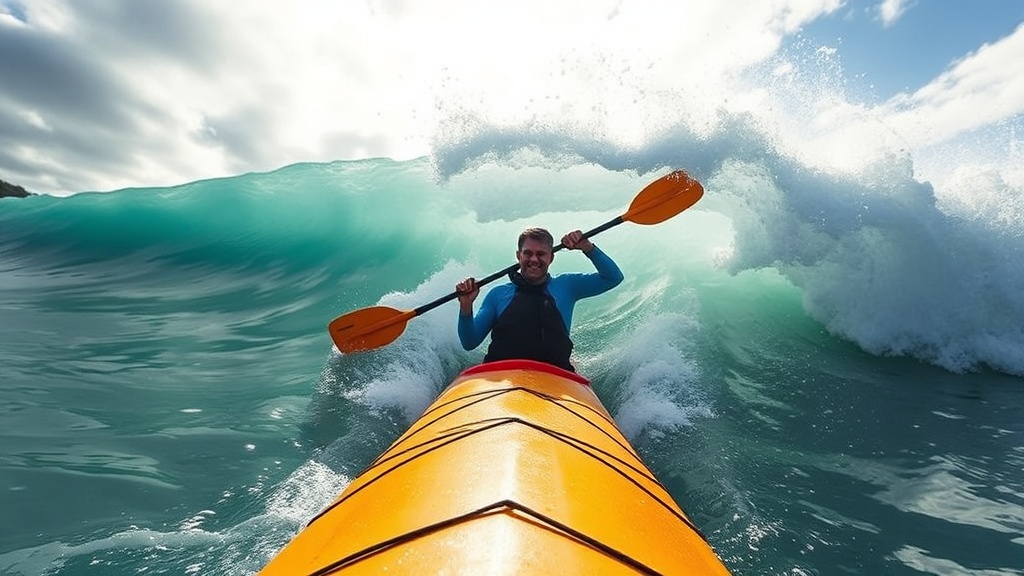
How to Catch and Ride Your First Wave in a Surf Kayak

This guide covers the fundamental techniques for catching and riding waves in a surf kayak—from selecting the right equipment and reading ocean conditions to proper positioning and paddle strokes. Mastering these basics opens up a thrilling dimension of kayaking that combines the raw power of ocean swells with the precision of paddle sports. Whether transitioning from flatwater paddling or crossing over from board surfing, the skills here will accelerate the learning curve and help avoid the frustrating mistakes that send most beginners back to shore early.
What Equipment Do You Need to Start Surf Kayaking?
The right equipment makes the difference between a frustrating first session and one that hooks you for life. Surf kayaks are specialized craft—shorter, more maneuverable, and built to handle the unique forces of breaking waves.
Start with a high-volume surf kayak between 7 and 9 feet long. The Riot Magnum and Pyranha Surf Jet are excellent beginner-friendly options that offer stability without sacrificing the responsiveness needed to carve on a wave face. These boats feature planing hulls—flat bottoms that allow the kayak to skip across the water's surface rather than slice through it.
Outfitting matters. A snug-fitting spray deck (spray skirt) keeps water out of the cockpit. The Seals Pro Shocker and Snap Dragon Ocean Trek are popular choices among surf kayakers for their durability and secure fit. You'll also need a paddle specifically designed for surf—typically shorter than touring paddles with reinforced blades to withstand impacts with sand and rocks. The Werner Paddle offers excellent surf-specific models like the Side Kick with fiberglass reinforced blades.
Safety gear is non-negotiable. Always wear a Coast Guard-approved personal flotation device (PFD) rated for dynamic water sports. The Astral YTV provides excellent mobility for paddling while offering reliable buoyancy. A helmet—ideally one designed for whitewater sports like the WRSI Current—protects against impacts with the kayak, paddle, or ocean floor during wipeouts.
| Equipment | Beginner-Friendly Options | Price Range (USD) |
|---|---|---|
| Surf Kayak | Riot Magnum, Pyranha Surf Jet, Mega Kayaks Bullit | $800 - $1,500 |
| Paddle | Werner Side Kick, Aqua-Bound Manta Ray | $150 - $350 |
| Spray Deck | Seals Pro Shocker, Snap Dragon Ocean Trek | $80 - $150 |
| PFD | Astral YTV, NRS Ninja | $100 - $200 |
| Helmet | WRSI Current, Sweet Protection Strutter | $60 - $150 |
Wear a wetsuit appropriate for local water temperatures—thicker suits (4/3mm or 5/4mm) for colder waters like those off Tofino, British Columbia or Northern California, and lighter spring suits or rash guards for warmer locations like San Diego or Hawaii. Booties with sturdy soles protect feet during beach launches and exits.
How Do You Read Waves and Position Your Kayak?
Reading waves involves understanding swell direction, wave period, and how different breaks form rideable surfaces. Start by observing the ocean for 10–15 minutes before entering the water—note where waves are breaking most consistently and identify any rip currents that might help with paddling out.
Beach breaks (waves breaking over sand) offer the most forgiving learning environment. The waves break in somewhat predictable patterns, and the sandy bottom reduces injury risk during falls. Point breaks and reef breaks—while offering longer, more organized waves—demand more experience and knowledge of local hazards.
Positioning is everything. Here's the thing: most beginners sit too far inside (close to shore) and get pummeled by breaking waves, or too far outside and miss the good sets entirely. The sweet spot—the "takeoff zone"—sits just beyond where waves are consistently breaking. Watch experienced surfers to identify this zone at your break.
Current and wind affect positioning dramatically. Offshore winds (blowing from land to sea) groom waves into clean, organized faces ideal for surfing. Onshore winds (blowing from sea to land) create choppy, disorganized conditions that challenge even experienced paddlers. Check Magic Seaweed or Surfline for local forecasts before heading out.
The "rip" (rip current) can be a beginner's best friend. These narrow channels of water flowing seaward act like conveyor belts, carrying kayakers past the break zone with minimal effort. Look for channels of darker, seemingly calmer water between breaking waves—that's often a rip current that'll save energy during the paddle out.
What Is the Proper Technique for Catching a Wave?
Catching a wave requires precise timing, paddle power, and body positioning working together in a brief window of opportunity. The catch happens when the wave's energy matches the kayak's speed—miss this moment, and the wave passes underneath or dumps on top of you.
Start by positioning the kayak perpendicular to the wave's direction of travel, facing shore. Angle the bow slightly toward the direction you intend to travel—if planning to go right, point the nose 10–15 degrees right of the wave's break line. This subtle angle makes transitioning onto the wave face smoother.
The paddle stroke sequence matters. As the wave approaches from behind, take three to four powerful forward strokes on alternating sides to match the wave's speed. The catch? You need to accelerate just as the wave begins to lift the kayak's stern. Too early, and the wave passes under. Too late, and it breaks on top of you.
When the wave catches—the moment you feel that sudden acceleration—lean back slightly and plant a strong stern rudder stroke on the side opposite your intended direction. For a right break (going right), plant the left blade near the stern and pry outward. This stabilizes the kayak and initiates the drop down the wave face.
Body position shifts dynamically. As the kayak drops down the face, lean forward slightly to keep the bow from pearling (diving underwater). Once on the wave, center the weight over the kayak's midsection. Use subtle edge control—lifting one knee slightly while dropping the opposite hip—to carve along the wave face.
Trimming (traveling straight down the line) comes before carving (turning on the wave face). Master trimming first—finding that zone where the kayak stays just ahead of the breaking part of the wave (the "pocket" or "power zone"). The wave provides constant propulsion here; use minimal paddling and focus on reading how the wave is changing.
How Do You Stay Safe While Surf Kayaking?
Safety in surf kayaking involves understanding ocean hazards, knowing personal limits, and mastering the wet exit and roll techniques before attempting serious surf. The ocean demands respect—conditions can change rapidly, and even small waves generate tremendous force.
Always surf with a buddy, especially as a beginner. Establish hand signals for common situations: "I'm okay," "I need help," or "Heading in." If paddling alone (not recommended for beginners), leave a float plan with someone on shore detailing your intended location and expected return time.
The wet exit is the emergency procedure every surf kayaker must master. If capsized and unable to roll up, tuck forward, pull the spray deck's grab loop, and swim out of the cockpit. Practice this in flat water until it's automatic—panic makes exiting difficult when held underwater by a wave's turbulence. The British Canoeing certification program offers structured instruction on these safety fundamentals.
Learn to read rip currents before they become dangerous. While useful for paddling out, getting caught in a strong rip on the way back to shore can exhaust inexperienced paddlers. If caught in a rip pulling you away from your landing zone, don't fight it—paddle parallel to shore until out of the current, then head in.
Understand surf etiquette to avoid collisions and conflict. The surfer closest to the breaking part of the wave has the right of way. Don't "drop in" on someone already riding a wave. When paddling back out, avoid the takeoff zone—paddle wide around breaking waves rather than through them. These unwritten rules keep everyone safer and make sessions more enjoyable.
Check equipment before every session. Inspect the spray deck for tears, ensure the PFD zips properly, and verify that the helmet straps aren't frayed. A broken spray deck in heavy surf can fill the cockpit with water, making the kayak extremely difficult to control.
Common Mistakes That Slow Your Progress
Most beginners struggle with the same handful of errors. Worth noting: these mistakes aren't failures—they're the normal learning curve. Recognizing them early accelerates improvement.
Over-paddling exhausts arms before the session really begins. Once on a wave, the wave does the work. Three or four strong strokes to catch it, then let gravity and the ocean's energy take over. Paddling while riding actually destabilizes the kayak.
Stiff upper body makes the kayak tippy and unresponsive. Keep shoulders relaxed, elbows bent, and use core rotation for paddle strokes. Tension transfers directly to the boat—loose hips and a relaxed grip on the paddle translate to better balance.
Looking down destroys balance. The kayak goes where the eyes go—look down at the deck, and the kayak drifts off course or pearls. Keep eyes focused on the horizon or down the line of the wave. This simple shift transforms stability instantly.
Wrong wave selection dooms beginners from the start. Those massive, perfectly peeling waves breaking far outside? They're not for learning. Start with smaller, whitewater reforms closer to shore—waves that have already broken once and reformed into gentler, rolling swells. Tofino's Cox Bay and Long Beach offer excellent beginner-friendly breaks during smaller swells.
The learning curve in surf kayaking is steep, but the rewards come quickly. That first successful ride—the feeling of the wave catching the hull and accelerating you forward—is addictive. With proper equipment, safety awareness, and patient practice of these fundamentals, catching and riding waves becomes second nature.
Steps
- 1
Position your kayak at the right spot in the lineup
- 2
Time your paddle strokes with the approaching wave
- 3
Lean back and ride the wave's face with control