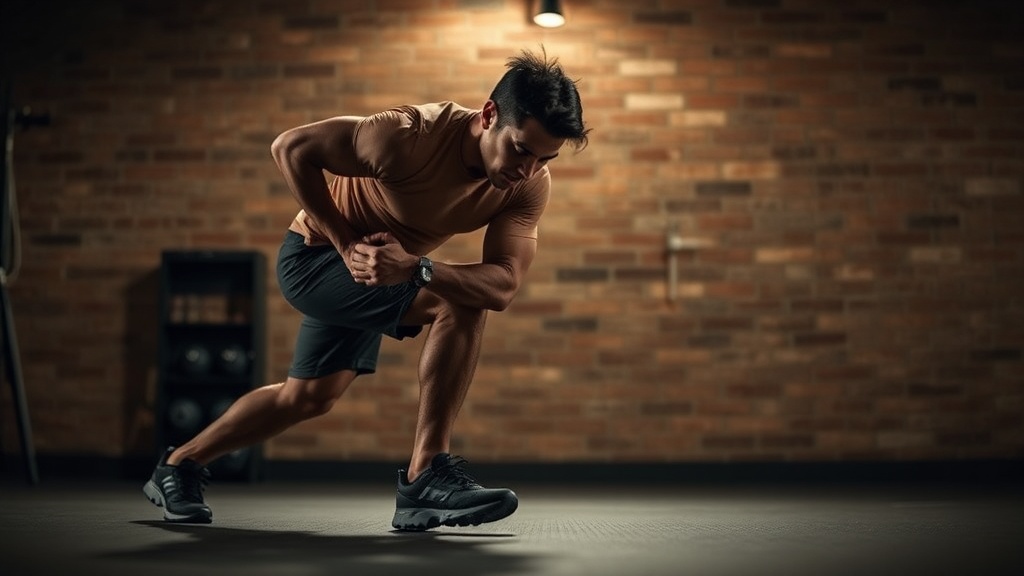
Strengthening Your Hip Mobility for Better Edge Control

You're carving a high line on a peeling right-hander, leaning into the edge to hold your line against a heavy section, and suddenly your hip catches. The boat feels stuck, or worse, you can't tilt it far enough to engage the rail without your lower body feeling locked and rigid. This lack of mobility isn't just a minor annoyance; it's a technical ceiling that limits your ability to react to changing water shapes. This post breaks down why hip mobility dictates your edge control and provides specific drills to unlock that movement.
Why Does Hip Mobility Affect Kayak Surfing?
Hip mobility directly impacts your ability to tilt the boat and engage the edge without disrupting your center of gravity. When your hips are tight, you often compensate by using your upper body or your paddle to move the boat, which makes your turns clunky and predictable. A mobile hip allows you to drive the edge through your lower body, keeping your torso stable and your eyes on the horizon.
Think about the way a high-performance surfboard moves under a rider. It's fluid. In a kayak, that fluidity comes from the connection between your seat and your pelvis. If that connection is stiff, you'll struggle to execute quick edge changes when a wave hits you unexpectedly. It's the difference between a graceful carve and a jarring, reactionary correction.
Most paddlers focus entirely on their core or their paddle stroke strength. While those are important, they won't help much if your pelvis is stuck in one position. You need that range of motion to absorb the bumps of a choppy surface while maintaining a sharp edge. It's a subtle distinction, but it's what separates the hobbyists from the pros.
If you've ever felt like you were fighting your own boat during a heavy swell, you've likely hit a mobility wall. You might want to look into physiological mobility concepts to understand how joint range affects overall movement efficiency. It's not just about being "flexible"—it's about functional control within that range.
What Are the Best Exercises for Hip Mobility?
The best exercises for hip mobility involve a combination of dynamic stretching, strength-based stability, and active end-range control. You can't just stretch a muscle and expect it to work under pressure; you have to train the muscle to be strong at its longest and shortest points.
I recommend a three-tiered approach: movement prep, strength, and stability. Here is a breakdown of what a typical session should look like:
- Dynamic Warm-up: Start with leg swings and hip circles to get blood flowing. Don't skip this.
- The 90/90 Stretch: This is a staple for a reason. Sit on the floor with your legs at 90-degree angles and rotate your hips through the range.
- Cossack Squats: These build lateral strength and mobility simultaneously. They are great for the side-to-side movements required in surf kayaking.
- Pigeon Pose: Use this for deep, static stretching after your session.
If you find your hips are constantly tight, you might also be dealing with tight hip flexors from sitting too much during the week. It's a common problem for people with desk jobs. To combat this, try incorporating movements that stretch the psoas. You can find more detailed anatomical breakdowns on government health-backed medical sites regarding muscle function.
Actually, if you're already working on your physical conditioning, you might find that improving your rotational power goes hand-in-hand with these hip movements. You can't rotate your torso effectively if your hips are a literal block of wood.
Comparison of Mobility Training Styles
| Method | Primary Focus | Best For... |
|---|---|---|
| Static Stretching | Increasing muscle length | Post-session recovery |
| Dynamic Movement | Improving functional range | Pre-session warm-ups |
| Loaded Mobility | Strength at end-range | Long-term structural change |
How Can I Use Hip Mobility to Improve Edge Control?
You use hip mobility by integrating it into your carving movements, specifically by using your pelvis to tilt the boat rather than just your shoulders. This technique allows you to keep your upper body stable while the lower half of the boat does the work. It's a game of weight distribution and subtle, rhythmic shifts.
When you're in a heavy, breaking wave, you need to be able to "sink" the edge. If your hips are locked, you'll likely lean too far, lose your balance, and capsize. A mobile hip allows you to tilt the boat aggressively while keeping your center of mass over the hull. It's a delicate balance—one that requires constant micro-adjustments.
One thing to keep in mind: don't overdo it. If you're training for high-intensity sessions, you'll need to manage your recovery. I've written about sleep hygiene for muscle repair before, and it's just as relevant here. If you're pushing your physical limits in the water, you have to respect the recovery time in the gym.
A good way to practice this in the water is through "edge drills." Find a small, consistent wave and practice switching from your left edge to your right edge without using your paddle for stability. Use your hips to tilt the boat, keeping your upper body relatively still. This forces you to rely on your lower body for control.
"The boat follows the hips. If the hips are stiff, the boat is stiff. If the hips move, the boat flows."
It's not just about the physical act, either. It's a mental transition. You have to stop thinking about "moving the paddle" and start thinking about "tilting the hull." This shift in mindset often follows the physical work you do in the gym. If you're too focused on the mechanics of the stroke, you'll miss the opportunity to use your body weight effectively.
Don't be afraid to use tools. A foam roller or a lacrosse ball can be a lifesaver when you're trying to work out a knot in your glutes or hip flexors. Most of us are much more "tight" than we realize, and sometimes a bit of targeted pressure is all it takes to regain that lost range of motion. Just be careful not to overdo it right before a session—you want mobile muscles, not sore, bruised ones.
If you're ever feeling particularly fatigued, check your nutrition and hydration. It's hard to perform well if your body is running on empty. I've shared some hydration strategies for high-intensity sessions that might help keep your muscle function optimal during long days on the water.
At the end of the day, edge control is about the relationship between your body and the water. A more mobile hip means a more responsive boat. It means you're no longer fighting the wave, but moving with it. It takes time to build that mobility, but the payoff in your carving ability is worth every minute of the grind.